The Flywheel Effect: A Simple System for Sustainable Growth
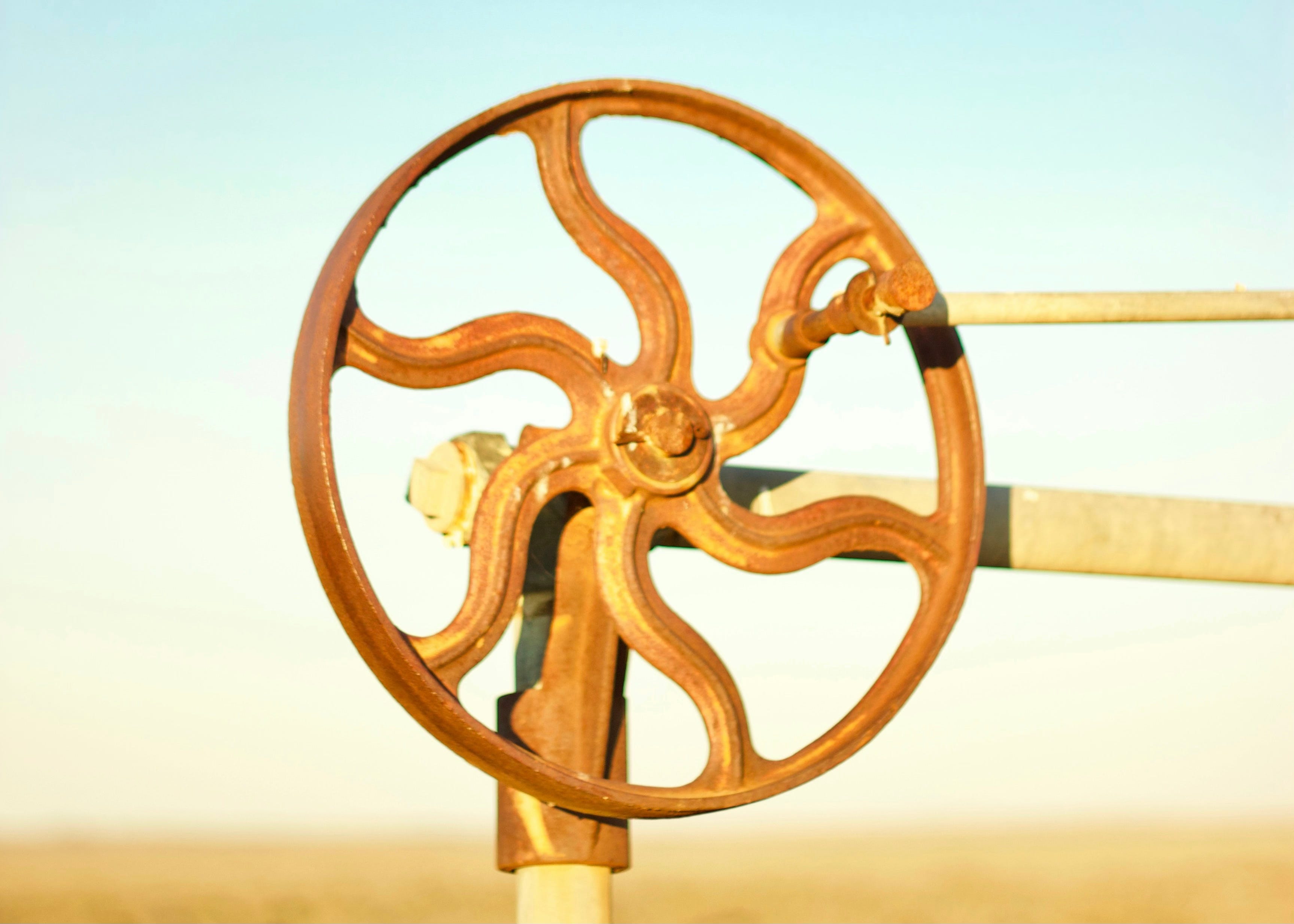
A flywheel stores energy through rotation... in business, sustained effort does the same!

Welcome to The Wealthy Sage Newsletter, where clarity meets action and connection leads to sustainable success.
Today’s theme is about how a simple engineering metaphor from business strategy became one of the most powerful ideas in modern marketing, and how you can apply it through my BEST Practice Kept Simple system to build a sustainable, long-term business.
It’s part of my Marketing, Sales and Profitability series, which explores how marketing, messaging, and monetisation work together to drive sustainable growth.
The Origins of the Flywheel Effect
When Jim Collins first introduced the Flywheel Concept in Good to Great (2001), he wasn’t talking about marketing at all. He was talking about momentum.
He observed that great companies don’t transform overnight through one defining moment. They build momentum gradually, turning the flywheel of disciplined actions again and again until the energy compounds. Eventually, the wheel spins almost effortlessly but only because of the consistent effort that came before.
Collins studied companies like Wells Fargo and Walgreens, noting how their sustained, disciplined efforts in core activities created unstoppable momentum over time. No single action made them great. Rather, it was the cumulative effect of thousands of consistent decisions aligned in the same direction.
In engineering, a flywheel stores energy through rotation. In business, it represents the same idea: sustained effort creates self-reinforcing momentum.
From Business Strategy to Marketing
Fast forward two decades, and marketers have adopted the flywheel metaphor to complement the old sales funnel model.
Nathan Barry of ConvertKit has been a particularly strong advocate for the flywheel approach in the creator economy, emphasising how great content and genuine relationships create self-perpetuating growth. HubSpot similarly popularised this shift in 2018 for the broader marketing world, arguing that the traditional funnel was fundamentally broken.
Where the funnel ends when a customer buys, the flywheel continues, recognising that existing customers drive future growth through referrals, reviews, and repeat purchases.
Instead of a linear process that leaks at every stage, the flywheel becomes a circular system where every satisfied customer fuels the next cycle of attraction.
This shift matters because marketing is no longer just about getting attention; it’s about building trust, loyalty, and advocacy: the forces that keep the flywheel spinning.
The Core Laws of the Flywheel
The flywheel works because of three underlying principles:
Flow – Energy moves continuously through the system, not in one-off campaigns.
Momentum – Each rotation becomes easier as systems and relationships strengthen.
Compounding – Every cycle amplifies the results of the previous one.
These aren’t abstract principles, they describe the mechanics of how marketing systems build energy.
The compounding effect is particularly powerful: imagine a customer who refers two colleagues, each of whom refers two more. If each cycle takes three months, you’ve grown from one customer to nine in just nine months, not through paid advertising but through the energy already in your system. That’s the flywheel at work.
Applying the Flywheel to Online Business: How BEST Practice Works
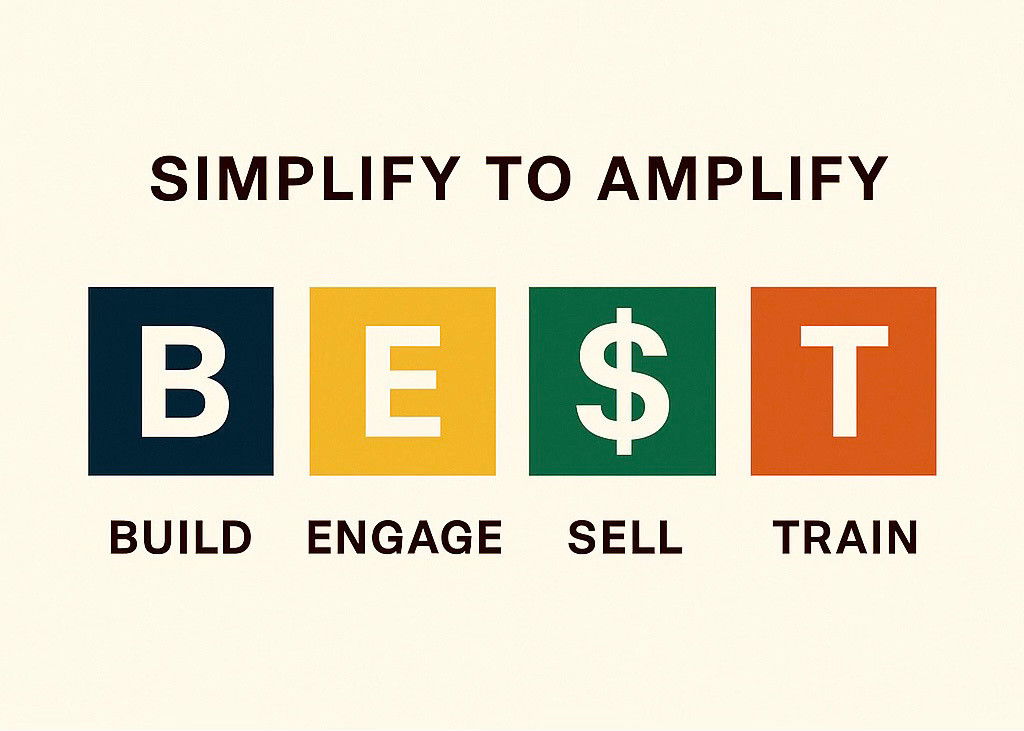
To make the concept practical, I use a simplified four-part version of the flywheel — BEST Practice Kept Simple — which focuses on the core activities that generate income and sustainability online.
1. BUILD
Attract leads and create your audience.
Publish useful content that builds visibility and credibility.
Use lead magnets or incentives to grow your list.
Your list is a primary asset of your business.
2. ENGAGE
Build relationships and qualify interest.
Nurture your subscribers with helpful, relevant content.
Listen, respond, and deepen trust.
Identify prospects who possess genuine interest in what you offer.
3. SELL
Turn engagement into action.
Make clear, aligned offers to your audience.
Deliver value and experience that exceed expectations.
Customers are the lifeblood of your business.
4. TRAIN
Transform buyers into advocates through education and support.
Deliver structured onboarding that ensures early wins.
Provide ongoing resources, training, or community access that helps customers achieve measurable results.
Create referral incentives or recognition programmes that make advocacy easy and rewarding.
Training isn’t just customer service, it’s the deliberate cultivation of success stories that ultimately become your most powerful marketing asset. When customers achieve results and feel supported, they naturally become your sales force.
🧠 Simplify to Amplify
The essence of the flywheel is its simplicity. Each turn of the wheel becomes easier because you’ve removed friction while focusing only on the activities that compound over time.
That’s what I call Simplify to Amplify: doing fewer things with greater intention.
When you focus on the four BEST actions — Build, Engage, Sell, and Train — you reduce noise, increase consistency, and amplify results.
Simplify your inputs to amplify your outcomes.
Why the Flywheel Works (and Where It Breaks)
The strength of the flywheel model lies in sustainability. It reminds us that success comes not from a single launch or viral post, but from consistently performing the right activities: every day, every week, every cycle.
When each stage of your system reinforces the next, your business gains stability, momentum, and scalability.
In time, you move from pushing the wheel to simply maintaining its rhythm.
But here’s where most businesses fail: they stop pushing too early. They BUILD an audience but never ENGAGE. They SELL but don’t TRAIN. Or they try to spin the wheel in multiple directions at once, chasing every new tactic instead of deepening what works.
The flywheel only compounds when you complete the full rotation and do so repeatedly.
In practice, the flywheel’s power comes from rhythm: doing fewer things, but doing them better and more consistently.
It’s then consistency that builds lasting success.
Final Thought
The genius of the flywheel lies in its simplicity: success compounds when effort is consistent and direction is clear.
Marketing today operates on exactly that principle.
Your job is to keep the wheel turning — to Build, Engage, Sell, and Train — until your business becomes self-sustaining through the energy this creates.
This post is public, so please feel free to share it.
Also, if you’ve enjoyed the post, please feel free to add your comment below. I always reply to comments.
With warm wishes,
Will Banks (aka The Wealthy Sage)
I write about where wisdom meets action: where stories and numbers come together to shape better decisions and more intentional, successful lives.
If you enjoy The Wealthy Sage Newsletter, please share it with friends and colleagues.
This makes so much sense, momentum really is the quiet engine behind success. It’s not flashy, just steady turns that eventually make everything feel effortless.
Very well written, @Will Banks — this brings such a clear perspective to what real momentum looks like.
It’s easy to forget that the “turns” of a business aren’t mechanical — they’re behavioural, and deeply human centred.
Each rotation builds belief, trust, and rhythm until it starts to feel almost effortless.
I especially love the link between sustainability and simplicity — “simplify to amplify” isn’t just a business truth, it’s a cognitive one too.
When friction drops, consistency takes over — and that’s when the flywheel truly starts to hum.